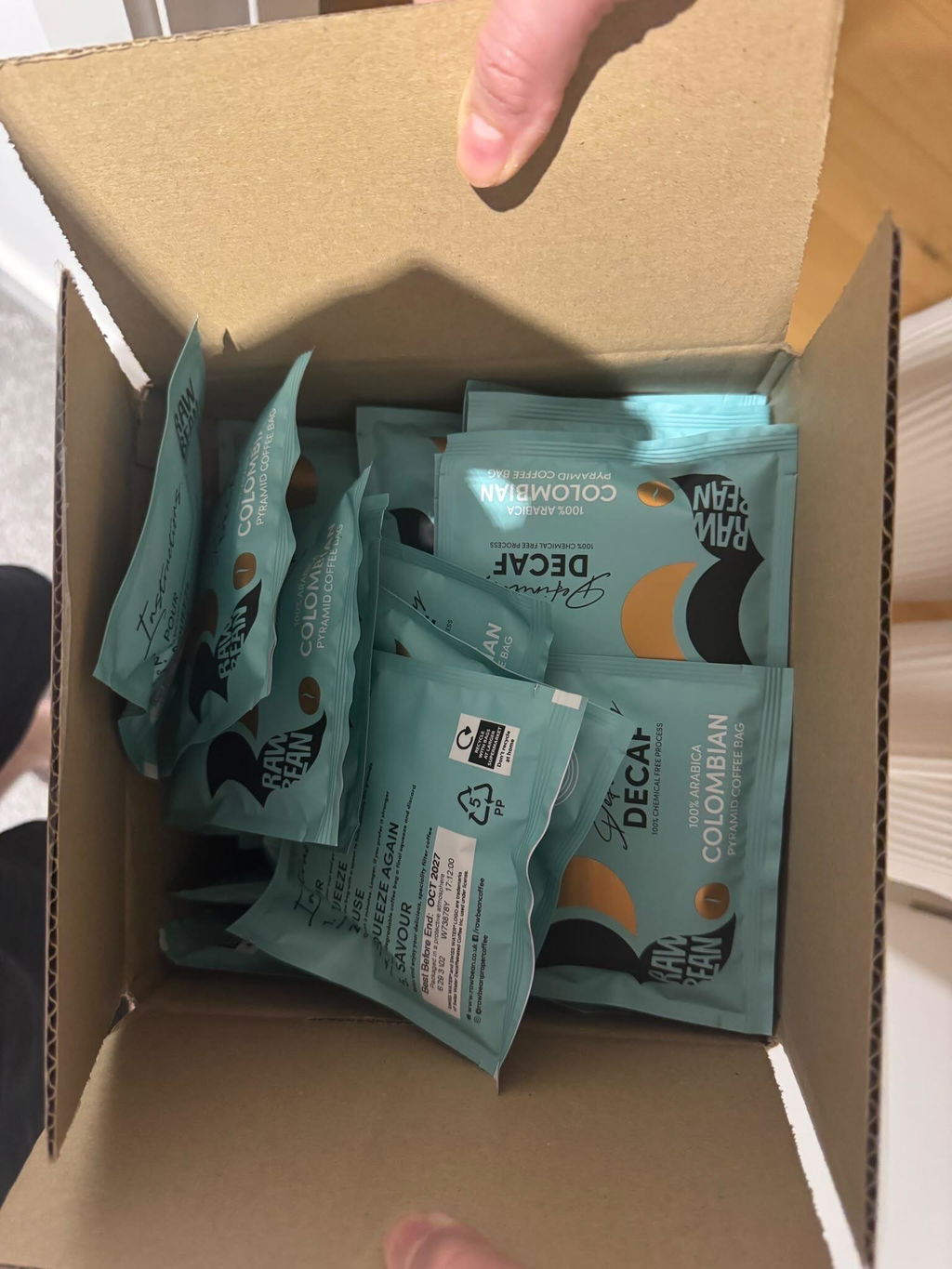
Coffee is one of the richest sources of antioxidants in the Western diet — and decaf keeps almost all of them.
People give up regular coffee for all sorts of reasons: pregnancy, anxiety, acid reflux, better sleep. What they're usually worried about is losing the benefits along with the caffeine. That worry makes sense. Coffee has a real and well-documented role in human health that goes well beyond the morning energy boost.
What most people don't realise is that the health benefits of coffee have very little to do with caffeine. They come from the hundreds of other compounds in your cup, particularly a family of polyphenols called chlorogenic acids. Those compounds survive decaffeination extremely well.
What's actually in your cup
Coffee is extraordinarily complex. Roasted coffee contains over 1,000 identified bioactive compounds, more than most foods we'd typically call "healthy." When you brew a cup, you're extracting a concentrated mixture of polyphenols, melanoidins, minerals, and other compounds that interact with your body in ways researchers are still mapping out.
The headline compounds are worth knowing about. Chlorogenic acids (CGAs) are the dominant polyphenols in coffee and the most studied antioxidants in the entire plant kingdom. A single cup of brewed coffee contains between 50 and 200 mg of CGAs depending on the roast level and brewing method.
Melanoidins are the brown compounds that form during roasting through a reaction between sugars and amino acids (the Maillard reaction, the same one that browns bread). They're powerful antioxidants in their own right and also act as prebiotics, feeding beneficial gut bacteria like bifidobacteria.
Cafestol and kahweol are diterpene compounds found mainly in unfiltered coffee like French press or espresso. These have anti-inflammatory and liver-protective properties, though they can also raise LDL cholesterol in high amounts.
Coffee also contributes meaningful amounts of magnesium, potassium, and B vitamins (particularly niacin) to the average diet.
The point is: coffee isn't just a caffeine delivery system. Caffeine is one compound among many hundreds. When you remove it, most of what's left stays exactly where it is.
The big one: chlorogenic acids
Chlorogenic acids deserve their own section because they're doing most of the heavy lifting.
CGAs are a family of polyphenols, specifically esters formed from caffeic acid and quinic acid. The most abundant one, 5-caffeoylquinic acid (5-CQA), makes up around 36–40% of total CGA content in a typical cup. Coffee isn't just a good source of CGAs — for most people in the Western world, it's the primary source by a considerable margin.
What do they actually do? A decade of research has established several mechanisms. CGAs inhibit pro-inflammatory signalling pathways, which helps reduce the chronic low-grade inflammation linked to most modern diseases. They also slow glucose absorption in the gut and improve insulin sensitivity — thought to be a key reason why both regular and decaf coffee drinkers show lower rates of type 2 diabetes in large population studies.
On the cognitive side, a 2024 systematic review and meta-analysis found that coffee-derived CGAs have measurable positive effects on cognitive function. The compounds appear to cross the blood-brain barrier and modulate neurotransmitter systems. They also improve endothelial function (the health of blood vessel walls) and help prevent the oxidation of LDL cholesterol, a key step in the development of atherosclerosis.
A clinical trial (Watanabe et al., 2019) found that participants drinking coffee with 369 mg of CGAs per day over 12 weeks saw significant reductions in belly fat, total body fat, waist circumference, and body weight compared to those drinking low-CGA coffee. That's not a marginal effect.
The key thing to understand about CGAs: they're not caffeine. They're a completely different class of molecule, and removing caffeine from coffee doesn't remove them.
Does decaf lose its antioxidants?
This is the question. The short answer: not much.
Several studies comparing regular and decaffeinated coffee have found that decaf retains roughly 85–90% of the antioxidant activity of regular coffee. One widely cited figure puts the difference at just 15% — meaning decaf gives you around 85% of the antioxidant benefit.
Some studies show retention slightly lower, some slightly higher, and the variation is explained almost entirely by the decaffeination method used rather than anything fundamental about decaf itself.
Think of it this way: caffeine and chlorogenic acids are different molecules with different properties. They behave differently during the decaffeination process. Caffeine is relatively easy to extract from coffee. CGAs are more tightly bound within the bean's structure and need more aggressive treatment to remove them. Standard decaffeination processes, when done well, target caffeine without stripping the polyphenols.
The decaffeination method matters. Which brings us to the next section.
Shop Swiss Water Decaf →
Not all decaf is equal
There are four main ways to remove caffeine from coffee, and they produce meaningfully different results.
Methylene chloride (MC) is a chemical solvent that selectively bonds to caffeine and carries it out of the bean. It's effective at caffeine removal but less good at polyphenol preservation. MC is banned in food use in the EU.
Ethyl acetate (EA) is often marketed as "natural" because EA occurs naturally in fruit — though it's also synthesised industrially, which is where virtually all commercial EA comes from. It can affect phenolic content more than some other methods.
Supercritical CO2 uses carbon dioxide under high pressure to dissolve and extract caffeine. It's very precise and good at preserving both flavour and antioxidants, but it's expensive and more common for specialty applications.
Swiss Water Process uses water, temperature, and time, with no chemical solvents. The process works by creating a Green Coffee Extract (GCE), a water solution already saturated with coffee compounds other than caffeine. When raw beans are soaked in this GCE, caffeine migrates out by osmosis, but the other compounds (including CGAs) have nowhere to go because the GCE is already saturated with them.
The result is decaffeinated coffee that keeps the full profile of antioxidants and flavour compounds, because those compounds were never under pressure to leave. Swiss Water Process is certified 99.9% caffeine-free, chemical-free, and it's the gentlest method for the polyphenols you actually want to keep.
Read our full comparison of decaf methods →
What this means for your health
The research on decaf coffee and health outcomes is now substantial enough to be clear about one thing: the health benefits of coffee aren't driven by caffeine.
Studies specifically on decaf drinkers show benefits across several areas. Regular coffee consumption is associated with significantly lower rates of liver disease, cirrhosis, and liver cancer — and these benefits appear in decaf drinkers too, pointing to antioxidants and melanoidins as the protective agents rather than caffeine. UCLA Health summarised the evidence plainly: the health benefits of coffee remain in the decaf version.
On cardiovascular health, decaf has been shown to lower blood pressure and improve blood vessel function. Some research suggests decaf may actually be preferable to regular coffee for certain cardiovascular outcomes, because it provides the antioxidant benefit without the acute blood pressure spike that caffeine causes.
For type 2 diabetes, a systematic review published in Diabetes Care found that both caffeinated and decaffeinated coffee were associated with reduced risk, with a dose-response relationship for decaf: more cups, lower risk.
Chronic inflammation is the common thread running through most of the diseases that kill people in developed countries. The polyphenols in decaf coffee, particularly CGAs and melanoidins, consistently reduce markers of systemic inflammation in research.
None of this means you can offset a poor diet with coffee. But if you've switched to decaf thinking you're giving up the health benefits, you're probably not.
Coffee vs other antioxidant sources
A Norwegian study that's become something of a landmark in nutrition research found that coffee was the single largest dietary source of antioxidants for adults, contributing roughly 11.1 mmol per day on average. For comparison: fruits contributed 1.8 mmol, tea 1.4 mmol, wine 0.8 mmol, and vegetables 0.4 mmol.
Coffee contributed more antioxidants than fruits and vegetables combined.
That sounds dramatic. It is, a bit. But the reason matters.
It's not that coffee is more antioxidant-dense per gram than blueberries or dark chocolate — it isn't. Some berries and high-cocoa chocolate do better per gram. The reason coffee dominates is volume. Very few people eat large amounts of blueberries every day, but millions of people drink two or three cups of coffee daily, consistently, year-round. The antioxidant intake adds up.
| Source |
Approx. daily antioxidant contribution (mmol) |
| Coffee |
11.1 |
| Fruits |
1.8 |
| Tea |
1.4 |
| Wine |
0.8 |
| Vegetables |
0.4 |
Worth saying clearly: this doesn't mean coffee replaces fruit and vegetables. They provide fibre, vitamins, and minerals that coffee doesn't. Antioxidant content is one dimension of nutrition, not the whole picture.
What it does mean is that if you're drinking decaf regularly, you're making a meaningful contribution to your antioxidant intake without even thinking about it, and that contribution is almost the same as it would be with regular coffee.
Putting it together
Coffee is packed with antioxidants — primarily chlorogenic acids, melanoidins, and other polyphenols — that have measurable anti-inflammatory, cardiovascular, liver-protective, and metabolic effects. These compounds are largely independent of caffeine.
Decaffeination removes the caffeine. When done well, using Swiss Water Process, it leaves the rest more or less intact. Decaf retains around 85–90% of the antioxidant activity of regular coffee, and that difference is largely undetectable in practice.
If you drink decaf because you sleep better without caffeine, or because you're pregnant, or simply because you can have a cup at 8pm without lying awake until midnight — you're not giving up the good stuff. You're mostly keeping it.
That matters. There's no other drink with this combination of evidence, accessibility, and daily consumption habit. For many people, their morning cup of decaf is doing more for their antioxidant intake than their five-a-day.
Explore Definitely Decaf →
Sources
-
Farah & Donangelo (2006) — Coffee Chlorogenic Acids Incorporation for Bioactivity Enhancement of Foods — CGA content in brewed coffee: 50–200mg per cup depending on roast and brew method; 5-CQA accounts for approximately 35% of total CGA in roasted coffee. PMC
-
Freeman et al. (2010) — Effects of decaffeination process on the phenolic content and antioxidant capacity of brewed coffees — Decaf retains approximately 85–90% of antioxidant activity of regular coffee. FASEB Journal
-
Svilaas et al. (2004) — Intakes of antioxidants in coffee, wine, and vegetables are correlated with plasma carotenoids in humans — Norwegian study (61 adults + 2,672-person national survey); coffee contributed ~11.1 mmol antioxidants/day — more than fruits, tea, wine, and vegetables combined. Journal of Nutrition
-
Bekedam et al. (2021) — Interest of Coffee Melanoidins as Sustainable Healthier Food Ingredients — Melanoidins have antioxidant, anti-inflammatory, and prebiotic properties; feed beneficial gut bacteria including bifidobacteria. Frontiers in Nutrition
-
Ding et al. (2014) — Caffeinated and Decaffeinated Coffee Consumption and Risk of Type 2 Diabetes: A Systematic Review and a Dose-Response Meta-analysis — Both caffeinated and decaf coffee associated with reduced T2D risk in a dose-response relationship. Diabetes Care
-
Watanabe et al. (2019) — Coffee Abundant in Chlorogenic Acids Reduces Abdominal Fat in Overweight Adults: A Randomized, Double-Blind, Controlled Trial — 150 participants; 369mg CGAs/day over 12 weeks significantly reduced visceral fat, body weight, and waist circumference vs. control. Nutrients / PMC
-
Swiss Water Process — GCE saturation mechanism — Green Coffee Extract pre-saturated with flavour compounds prevents CGA loss during decaffeination; process certified 99.9% caffeine-free. Swiss Water
Further reading:
- Is decaf coffee good for you? The full picture →
- Swiss Water Process vs chemical decaf — what's the difference? →