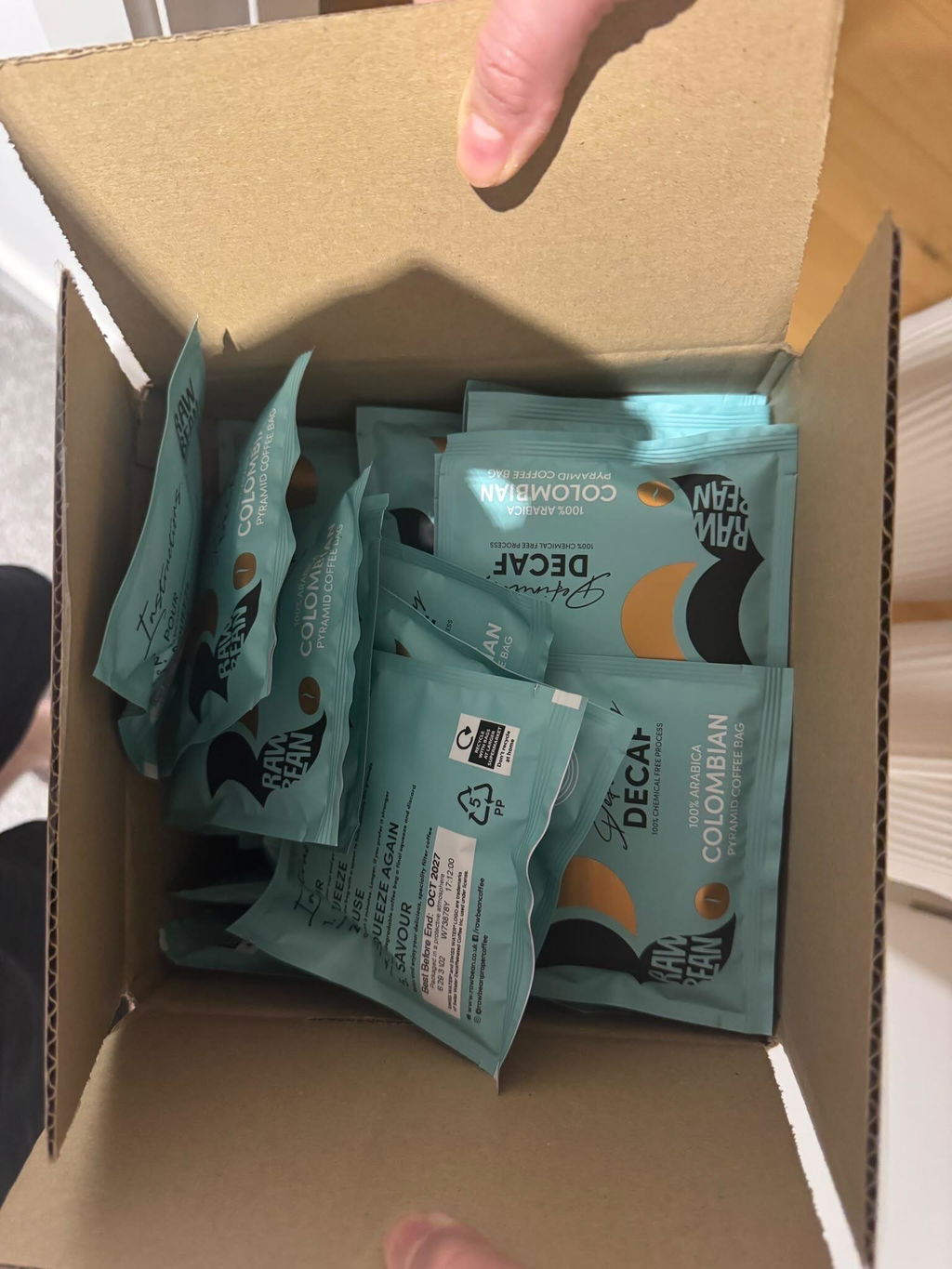
Yes. Decaf retains most of the antioxidants and health benefits of regular coffee, without the caffeine.
There's a persistent idea that decaf is somehow lesser. A consolation prize for people who can't handle the real stuff. The health-conscious choice that sacrifices all the good bits along with the caffeine.
That's not what the science says. Not even close.
Studies comparing coffee drinkers to non-coffee drinkers consistently show similar benefits whether the coffee is caffeinated or decaf. Harvard's T.H. Chan School of Public Health put it plainly: "Most of the metabolic effects are probably not related to caffeine, and a lot of the protective associations seen in caffeinated coffee are also seen in decaf."
It comes down to what decaf actually keeps.
What decaf keeps
Caffeine is just one of hundreds of compounds in a coffee bean. When you decaffeinate coffee, you're targeting one specific molecule — not stripping out everything that makes coffee worth drinking.
The big ones are chlorogenic acids: powerful polyphenols that fight oxidative stress, support blood sugar regulation, and may protect against cell damage. Some research suggests decaf can actually contain more chlorogenic acid than regular coffee. One study found decaffeination produced a 16% average increase in total chlorogenic acid content in green beans. The process can change the bean's chemistry in ways that concentrate these compounds rather than destroy them.
Melanoidins form during roasting and give coffee its characteristic dark colour and bitter-sweet depth. These compounds survive decaffeination intact.
Minerals including magnesium, potassium, and niacin (B3) are all present too. None are removed during decaffeination. Other polyphenols — caffeic acid, trigonelline, diterpenes like cafestol and kahweol — stay put as well. A properly decaffeinated coffee typically retains 85–95% of its original antioxidant activity.
What you're drinking when you have a well-made cup of decaf is essentially coffee, minus the caffeine.
The health benefits
Liver protection
This is one of the most consistent findings in coffee research, and it holds for decaf.
A major analysis found that coffee drinkers of all types had a 21% reduced risk of chronic liver disease, a 20% reduced risk of fatty liver disease, and a 49% lower risk of dying from chronic liver disease, compared to non-coffee drinkers. Decaf counted.
The NHANES study, which tracked nearly 28,000 US adults, found that people drinking three or more cups of coffee daily had significantly lower liver enzyme levels — a marker of liver stress — whether their coffee was caffeinated or not.
Animal studies specifically on decaf have shown it protects against early-stage non-alcoholic steatohepatitis (NASH), the progressive fatty liver condition that's becoming increasingly common. The American Association for the Study of Liver Disease now recommends either caffeinated or decaf coffee — at least three cups a day — to support liver health.
Heart health
Caffeine raises blood pressure in some people. Decaf doesn't. So for people who are caffeine-sensitive, decaf may actively benefit heart health by removing that trigger while keeping the protective polyphenols.
A 2022 analysis found that moderate decaf consumption helps lower blood pressure over time. A 2021 meta-analysis showed people drinking around three cups of coffee a day had a 13% lower risk of all-cause mortality compared to non-coffee drinkers, with findings similar whether the coffee was caffeinated or decaf.
Brain health
Coffee's neuroprotective compounds don't need caffeine to work. Chlorogenic acids activate a cellular defence mechanism called the Nrf2 signalling pathway — your body's master regulator of antioxidant defence. A 2025 study confirmed this pathway activation happens regardless of caffeine content.
Both caffeinated and decaffeinated coffee have been linked to reduced risk of Parkinson's disease and improved cognitive markers, with coffee's polyphenols rather than caffeine likely driving the effect.
Reduced anxiety
This one's straightforward. Caffeine is a stimulant, and for people who are sensitive to it, regular coffee can trigger anxiety, heart palpitations, and restlessness. Decaf keeps the ritual — the warmth, the taste, the break in your day — without the physiological stimulation.
A 2022 study found that both regular and decaf coffee may help improve depression symptoms, with the benefits linked to polyphenols rather than caffeine. You're not giving up mood support when you switch to decaf.
Digestive benefits
Regular coffee is a well-known gut stimulant, partly because of caffeine and partly due to other compounds. Decaf reduces that stimulation — clinical research found that gastro-oesophageal reflux symptoms are significantly lower after drinking decaf compared to regular coffee, with the amount of time the oesophagus is exposed to acid dropping sharply.
Decaf is also gentler on the stomach lining. For people with IBS, acid reflux, or other digestive sensitivities, it's often the only coffee that doesn't cause problems.
The polyphenols in decaf also support gut microbiome health. Early research suggests they help feed beneficial gut bacteria, which matters for digestion, immunity, and even mental health.
What about the process?
Not all decaf is made the same way, and the method does matter — for both health and taste.
Some decaf is made using chemical solvents (methylene chloride or ethyl acetate). The FDA considers residue levels safe, but not everyone's comfortable with that, especially pregnant women or people with sensitivities.
Swiss Water Process uses no chemicals at all. Green coffee beans are soaked in heated water infused with green coffee extract, which draws out caffeine through osmosis while leaving the flavour compounds and antioxidants behind. The result is 99.9% caffeine-free coffee with no solvent involvement, and the gentler process better preserves beneficial antioxidants like chlorogenic acid.
It also produces better-tasting coffee. Chemical decaffeination can strip the volatile aromatic compounds that give coffee its complexity. Swiss Water doesn't.
We've written a full breakdown of how the methods compare: Swiss Water Process vs Chemical Decaf — What's the Difference?
Shop Swiss Water Decaf →
When decaf makes sense
Pregnancy
UK guidelines recommend keeping caffeine under 200mg a day during pregnancy. A regular cup of coffee has around 95mg. Decaf has 2–15mg, low enough that even a couple of cups a day stays well within safe limits.
The NHS lists decaffeinated coffee as a good substitute for caffeinated drinks during pregnancy. If you're pregnant and can't imagine giving up coffee entirely, decaf is the obvious answer. (Swiss Water Process is the one to choose if you want to avoid chemical solvents entirely during pregnancy.)
Anxiety or caffeine sensitivity
For people who experience anxiety, heart palpitations, jitteriness, or sleep disruption from caffeine, decaf gives you the coffee experience without the trigger. Some people find their relationship with coffee completely changes when they switch — they can drink it when they want, not when their body allows.
Evening coffee rituals
An after-dinner coffee doesn't have to mean a poor night's sleep. Caffeine has a half-life of about 5–6 hours, which means a 3pm coffee still has half its caffeine in your system by 9pm. Decaf removes that calculation entirely.
Medication interactions
Caffeine interacts with a range of medications: certain antibiotics, antidepressants, thyroid medications, and blood pressure drugs among them. If you're on medication that doesn't mix well with caffeine, decaf lets you keep drinking coffee without the interaction risk. Always worth checking with your GP if you're unsure.
Anyone who loves coffee but not the jitters
Honestly, this covers a lot of people. Plenty of coffee lovers genuinely prefer decaf — not because they have to, but because they can drink more of it, enjoy it whenever they want, and sleep fine afterwards. Once you find a Swiss Water decaf that's been roasted well, there's no sacrifice involved.
Common myths about decaf
"Decaf is unhealthy"
The opposite is well-supported by evidence. Decaf retains most of coffee's beneficial compounds: polyphenols, chlorogenic acids, minerals, melanoidins. The links between coffee and better liver health, heart health, and reduced mortality apply to decaf as well as caffeinated coffee.
"Decaf tastes bad"
This is process-dependent and roast-dependent, not a fact about decaf itself. Poorly made decaf — usually cheap solvent-processed beans, roasted dark to mask the damage — does taste flat. Swiss Water decaf, properly roasted, tastes like coffee. Chemical decaffeination strips aromatics; Swiss Water doesn't. A good decaf should be indistinguishable from its caffeinated equivalent.
"Decaf has no caffeine"
It has very little, not none. An 8oz cup of decaf typically contains 2–15mg of caffeine, compared to around 95mg in regular coffee. That's about a 97% reduction. For most people, that trace amount is irrelevant. But if you're extremely caffeine-sensitive or consuming multiple cups a day while pregnant, it's worth knowing the number isn't zero. Swiss Water Process gets closest, typically 99.9% caffeine-free by the time it reaches you.
For a deeper look at caffeine content across decaf types, see How Much Caffeine Is Actually in Decaf Coffee?
The short answer
Decaf is good for you. The same polyphenols, antioxidants, and protective compounds that make coffee one of the most studied health foods in the world are still present after decaffeination. The liver benefits, heart benefits, and neuroprotective effects all show up in decaf drinkers too.
What changes is the caffeine. Which, depending on your situation, might be exactly what you need.
If you want the full benefit — compounds intact, no solvents, better flavour — Swiss Water Process decaf is the one to look for. It's how all our decaf is made.
Want to understand more about what's in your coffee? Read our full guide to antioxidants in coffee, or find out how decaf affects sleep compared to regular coffee.
Explore Definitely Decaf →
Sources
-
Harvard T.H. Chan School of Public Health — Does decaf coffee have the same health benefits as caffeinated? — Source of the quote: "Most of the metabolic effects are probably not related to caffeine." Harvard HSPH
-
Kennedy et al. (2021) — All coffee types decrease the risk of adverse clinical outcomes in chronic liver disease: a UK Biobank study — 21% reduced risk of chronic liver disease, 49% lower risk of dying from chronic liver disease, across all coffee types including decaf. BMC Public Health
-
Wadhawan & Anand (2016) — Inverse associations of total and decaffeinated coffee with liver enzyme levels in NHANES 1999–2010 — Nearly 28,000 US adults; decaf drinkers had significantly lower liver enzyme levels. PMC
-
Poole et al. (2017) — Coffee consumption and health: umbrella review of meta-analyses — Meta-analysis showing ~13% lower all-cause mortality at approximately 3 cups/day, findings similar for caffeinated and decaf. PMC
-
Ding et al. (2014) — Caffeinated and Decaffeinated Coffee Consumption and Risk of Type 2 Diabetes: A Systematic Review and a Dose-Response Meta-analysis — 30 prospective studies, ~1.2 million participants; each additional cup of decaf associated with 6% lower T2D risk. Diabetes Care
-
Chlorogenic acids and lactones in regular and water-decaffeinated arabica coffees (2006) — Decaffeination produced a 16% average increase in total chlorogenic acid content in green beans. PubMed
-
Freeman et al. (2010) — Effects of decaffeination process on the phenolic content and antioxidant capacity of brewed coffees — Decaf retains approximately 85–90% of antioxidant activity of regular coffee. FASEB Journal
-
NHS — Foods to avoid in pregnancy — UK guidelines recommend keeping caffeine under 200mg/day during pregnancy; decaffeinated coffee listed as a good substitute. NHS
-
Wendl et al. (1994 / 1997) — Effect of decaffeination of coffee on gastro-oesophageal reflux — Decaf significantly reduced oesophageal acid exposure time compared to regular coffee. Alimentary Pharmacology & Therapeutics / Wiley
Related reading:
- Swiss Water Process vs Chemical Decaf
- Antioxidants in Coffee — What They Are and Why They Matter
- Decaf Coffee and Sleep — Does It Actually Help?