Having problems getting to sleep? Switching to a coffee free of caffeine for your evening cup can help, but here are 10 more tips to help you get a better night’s sleep.
By Alex, Founder of Raw Bean Coffee | Originally published January 2022 | Updated April 2026
It's no secret that coffee contains caffeine, a stimulant that regularly gets a bad rap for causing sleepless nights. But with around 98 million cups of coffee consumed in the UK every single day, is it possible to continue to enjoy our favourite drink without losing sleep over it?
Sleep matters more than most people give it credit for. It's when your memories get filed and stored (or wiped clean), and when your body repairs itself from the day's wear and tear. Most adults need at least seven hours each night, and the consequences of falling short are real: according to the Cleveland Clinic, insufficient sleep has been linked to weight gain, heart disease, high blood pressure and depression. Mayo Clinic research has even shown that sleep deprivation leads to a measurable increase in visceral abdominal fat — the kind most closely linked to metabolic disease.
If you're tossing and turning and watching the clock creep into the early hours, it's worth trying something different. Everything below is backed by sleep research, and you can start tonight.
The caffeine question
Caffeine has a half-life of roughly 3 to 6 hours, meaning half the caffeine from your afternoon coffee may still be circulating at bedtime. That matters more than most people think. Research published in the Journal of Clinical Sleep Medicine found that caffeine consumed even 6 hours before bed caused measurable sleep disruption — participants lost over 40 minutes of total sleep time and experienced more nighttime waking. The study's authors recommended avoiding caffeine after 2pm, a guideline the NHS also endorses.
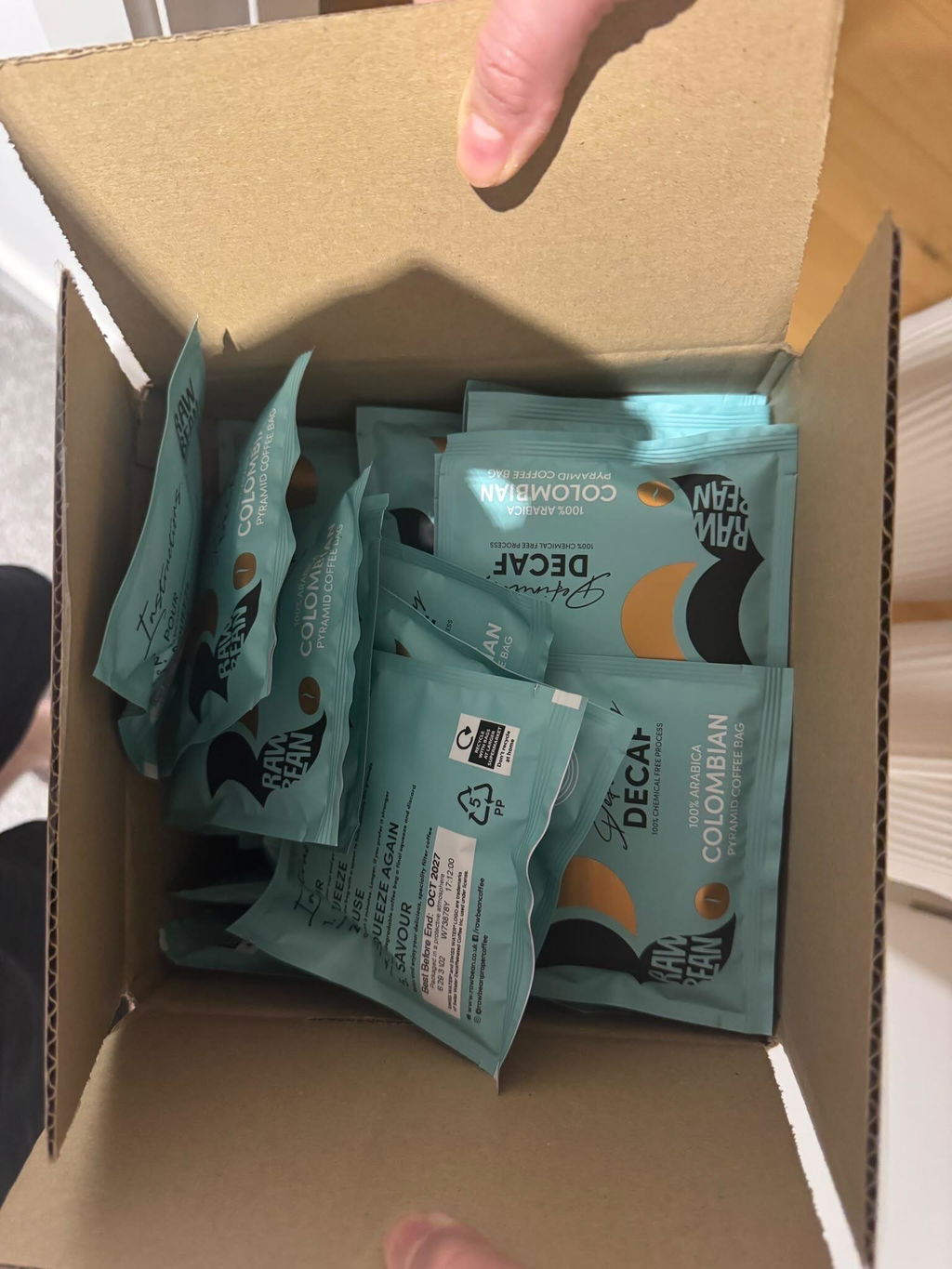
If you enjoy a cup of coffee in the evening, don't despair. It may be worth switching to a lower caffeine content coffee such as our Definitely Decaf. You may wonder, "is decaf coffee free of caffeine?" Yes, mostly! Our Swiss Water Process decaf removes 99.9% of the caffeine, leaving all the flavour without the stimulant effects. If you'd like to understand exactly how much caffeine remains, we've covered it in detail in our guide to how much caffeine is in a decaf coffee.
Alternatively, you could switch to a blend using a lower caffeine bean like our Breakfast Blend, which as a 100% Arabica blend delivers a lower caffeine content than Robusta blends.
If you've already made the switch and are still lying awake making lists well into the early hours, there are plenty of other tips you can try.
Daytime routines that actually help
-
Exercise daily, but time it right. Harvard Medical School recommends daily physical activity for better sleep — it boosts natural sleep hormones including melatonin. But avoid vigorous exercise within 2-3 hours of bedtime. A brisk walk or a morning run will leave you more physically tired come evening, without the late-night energy spike from a HIIT session at 10pm.
-
Stick to a consistent sleep schedule. Try going to bed and getting up at the same time each day — including weekends. The NHS advises that a fixed wake-up time is even more important than a fixed bedtime, as it anchors your body clock and makes mornings easier over time.
-
Build some downtime into your day. If you dash about all day long, it's hard to switch off come evening. Even 20-30 minutes of quiet time helps. Read a book with a cup of Raw Bean Definitely Decaf, take a warm bath, put some music on. It doesn't need to be fancy. The point is giving your brain permission to slow down before bedtime.
What you eat matters too
-
Eat foods rich in tryptophan. Tryptophan is an amino acid your body uses to produce serotonin and melatonin — both directly involved in regulating sleep. Good sources include milk, chicken, turkey, pumpkin seeds, and tart cherries. Pairing these with carbohydrates (like wholegrain toast or a banana) helps tryptophan cross the blood-brain barrier more effectively, according to research from the Sleep Foundation. A light evening snack along these lines can genuinely help — just keep it small.
-
Skip spicy food and large meals before bed. A heavy or spicy meal close to bedtime can cause acid reflux and discomfort that keeps you awake. It's also smart to steer clear of sugar, to avoid those 11pm energy spikes. Give your body at least 2-3 hours to digest before lying down.
-
Switch to decaf after midday. Our decaf coffee bags taste like proper coffee without the buzz. All the warmth, none of the wired-at-midnight feeling. For more on how coffee and health interact, have a read of our Coffee and Health FAQ.
Your bedroom setup
-
Train your body that bed means sleep. If you answer phone calls, scroll social media or watch TV in bed, you're giving your body mixed signals. You're conditioning it to stay awake despite being under the covers. Sleep researchers call this "stimulus control": your brain should associate the bedroom with sleep and nothing else.
-
Sleep in a darkened room. If you have a street lamp outside or struggle to snooze beyond sunrise, invest in some blackout curtains. The Sleep Foundation confirms that light exposure in the bedroom disrupts your circadian rhythm and makes it harder to fall and stay asleep.
-
Keep a notepad beside your bed. When, as you're drifting off, you remember that phone call you absolutely must make in the morning, or the packed lunch for the little one's school trip — jot it down. Park it on paper, ready for when you can deal with it. The NHS recommends setting aside a few minutes before bed to write a to-do list for the next day, which helps put racing thoughts to rest before they keep you up.
-
Ban screens for at least an hour before bed. The blue light emitted by phones, tablets and laptops suppresses melatonin production in a dose-dependent way, according to research published in the Journal of Applied Physiology. Melatonin is the hormone that signals your body it's time to sleep, so keeping screens on late effectively tells your brain to stay alert.
-
Keep your bedroom cool — between 16 and 18°C. Your core body temperature naturally drops as you fall asleep, and a cooler room supports that process. The Sleep Foundation recommends a bedroom temperature of around 18.3°C (65°F) for most adults, backed by research showing that ambient temperature is one of the strongest environmental factors affecting sleep quality. Keep your room tidy too, so when you crawl between the sheets you can properly relax. A few houseplants also help remove CO2 and add a calming feel.
None of this costs anything, and most people notice a difference within a week or two. You don't need to do all ten at once either. Pick a couple, stick with them, and build from there. And if you fancy a warm cup of something before bed, our decaffeinated coffee was made for exactly that.
For more about our range of coffee products and their caffeine content, get in touch.
Sources
- British Coffee Association — UK Coffee Consumption
- Cleveland Clinic — What Happens When You Don't Get Enough Sleep?
- Mayo Clinic — Lack of Sleep Increases Unhealthy Abdominal Fat
- Drake, C. et al. (2013) — Caffeine Effects on Sleep Taken 0, 3, or 6 Hours Before Going to Bed, Journal of Clinical Sleep Medicine
- Harvard Medical School — Sleep Hygiene: Simple Practices for Better Rest
- NHS Every Mind Matters — How to Fall Asleep Faster and Sleep Better
- Sleep Foundation — What Is Tryptophan?
- St-Onge, M.P. et al. (2020) — Effects of Diet on Sleep: A Narrative Review, Nutrients
- West, K.E. et al. (2011) — Blue Light from LEDs Elicits a Dose-Dependent Suppression of Melatonin, Journal of Applied Physiology
- Harding, E.C. et al. (2019) — The Temperature Dependence of Sleep, Frontiers in Neuroscience
- Sleep Foundation — Best Temperature for Sleep
- Sleep Foundation — Bedroom Environment
Related reading:
Six health benefits of decaf coffee
The Swiss Water Process: how we decaffeinate coffee without the chemistry set
Coffee and health: 10 questions people always ask
The Decaf FAQ: every question about decaffeinated coffee, answered
Cutting down caffeine: how to survive a January reset